
The contact point for cooperation between companies and the University of Tübingen.

As Atte Isomäki from the Finnish company Viima quite rightly pointed out in his company blog, everyone - well, almost everyone - has the potential to be creative. Essentially, it's about using this potential properly, and this applies above all to medium-sized and large companies. They have vast resources and an overwhelming number of employees, so it's somewhat surprising that they tend to fail when it comes to innovation. Even if the blame is quickly placed on the staff (“Our employees aren't the most creative people”), there are always many reasons why innovations fail or, worse, are not even attempted in the first place.
Let's take a curious look at some of the reasons why companies stumble in innovation projects on the following pages.

The new home for innovation is growing and thriving. Every month, we will document the progress of the construction phase of the new innovation building on the Morgenstelle site at the foot of the GUZ.
The building will be a place for innovation, knowledge and technology transfer, as well as start-up activity. In addition to the “classic” research questions, issues relating to transfer will be raised and discussed together. How does research recognize a potentially exploitable product or an idea that can be exploited? When is an idea mature enough to become valuable? How can you tell that an idea or product can serve a market? When is it better to sell, license, or distribute a result yourself?
The provision of modern media and work materials is of great importance both for training and for preparing for discussions as well as negotiations with potential interested parties and investors. Thus, researchers are supported in their creativity and at the same time gain valuable insights into the business world, especially regional companies, with the innovation building serving as a bridge element.
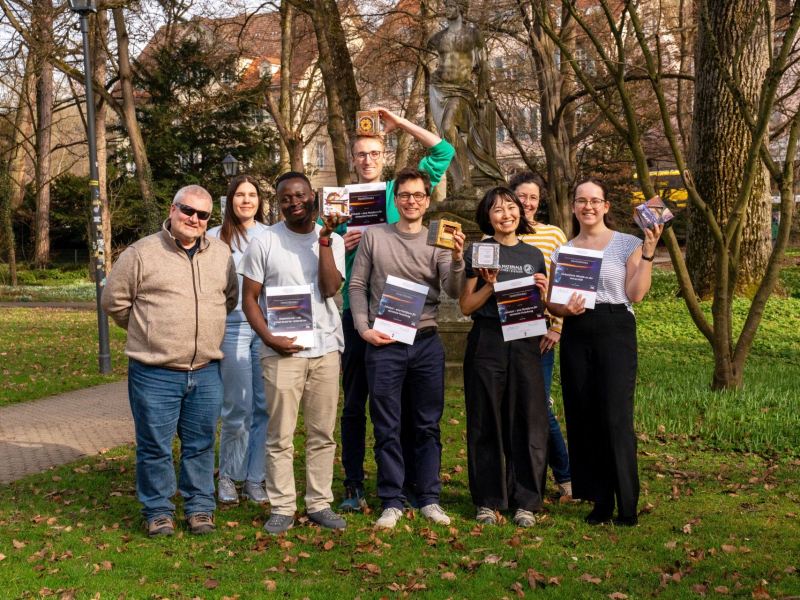
For the third time, the best ideas from InnoSparks were honored. This year, too, sparks of enthusiasm flew. You have once again demonstrated the creativity and commitment that exists at our University! There was a lively exchange about the individual projects. Whether it's about connecting researchers, bringing more color to the lecture halls, or planning laboratory experiments online via a platform—we look forward to accompanying you on the path to implementation.
The wooden puzzle boxes from our sponsor MagicHolz guaranteed lots of fun this year too.
By clicking on this page, you will find the award-winning ideas from the last three rounds. Be inspired and take part in the next InnoSparks yourself.